What Tasks Can a Service Dog Be Trained to Perform?
Written on June 23, 2026 | Posted in Articles, Medical Service Dogs, Service Dogs

More Than Just “Help”
When people think of service dogs, they often picture general assistance—but the reality is much more specific.
Service dogs are trained to perform clearly defined, task-based behaviors that directly support a handler’s disability.
These are not vague skills.
They are:
- Purpose-driven
- Repeatable
- Reliable in real-world environments
At Specialty Dog Training, we focus on building functional, results-driven task work that improves daily life in meaningful ways.
What Qualifies as a Service Dog Task?
A service dog task must:
- Be directly related to the handler’s disability
- Be trained and repeatable
- Provide a functional benefit in daily life
Examples:
- Retrieving medication
- Assisting with mobility
- Interrupting behaviors
- Responding during medical events
Not included:
- General companionship
- Emotional comfort without trained behavior
- Basic obedience alone
Response vs Detection: The Key Distinction
There is a lot of confusion around service dog capabilities—especially regarding detection.
At SDT, we are clear in our approach:
“While some dogs may naturally develop the ability to detect changes over time, our training focuses on reliable, repeatable response behaviors that create real-world safety and support.”
Why this matters:
- Response behaviors can be trained and proofed
- Detection is not guaranteed
- Reliability is critical in real-world situations
We train for what we can control and deliver consistently.
Complete Breakdown of Service Dog Tasks
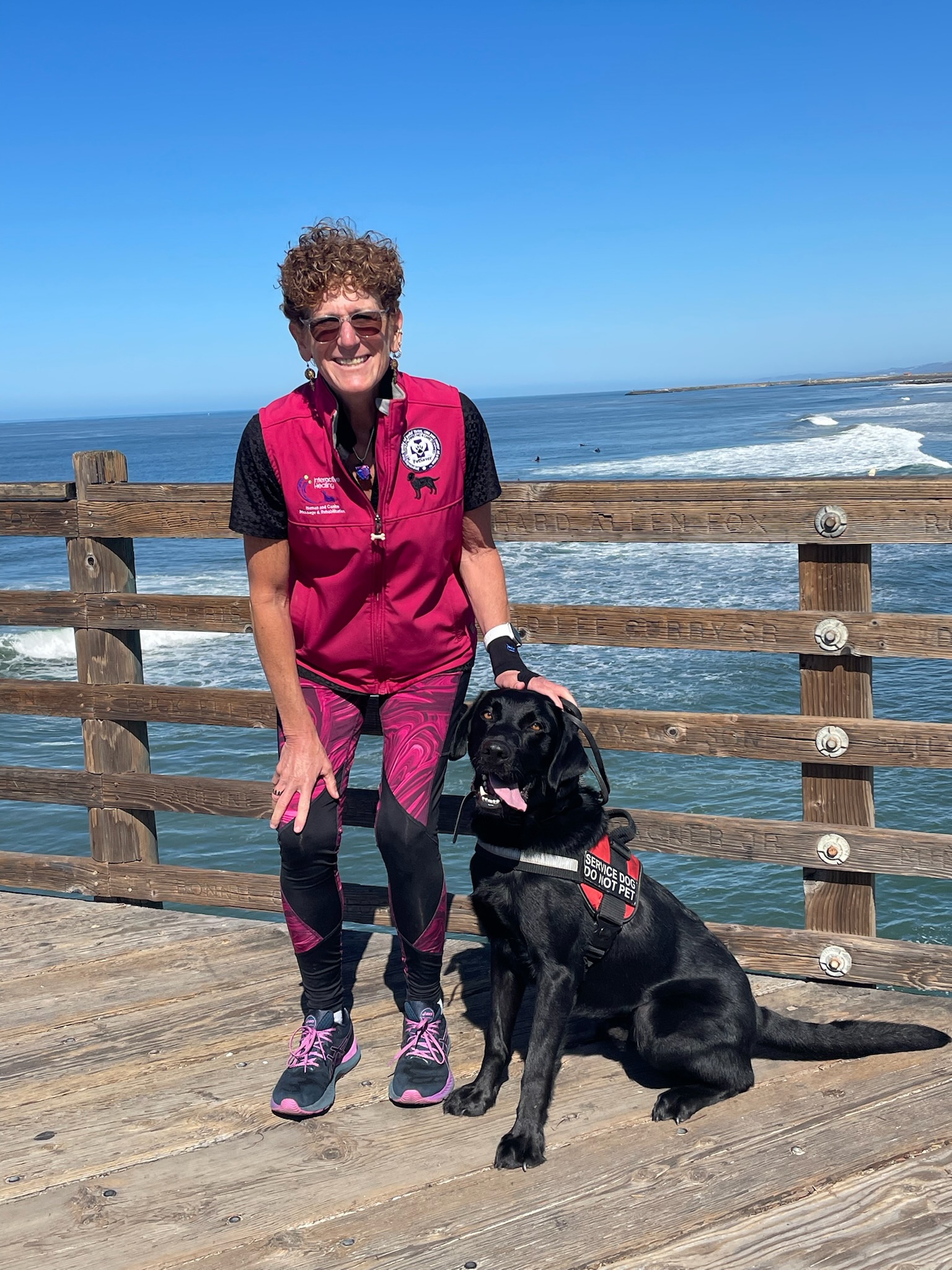
1. Retrieval Tasks
One of the most widely used and valuable categories.
Dogs can retrieve:
- Keys
- Phones
- Medication
- Water
- Assistive items
Benefit:
Reduces physical strain, increases independence, and supports energy conservation.
2. Mobility Assistance Tasks
For individuals with physical limitations.
Tasks may include:
- Counterbalance while walking
- Assistance with standing or transitions
- Stability during movement
⚠️ Only trained when:
- The dog is physically appropriate
- The work is safe and ethical
3. Medical Response Tasks
These tasks support handlers during or after a medical event.
Examples:
- Staying with the handler during an episode
- Assisting with positioning
- Retrieving medication
- Activating an alert system
Focus: Safety and support during critical moments.
4. Deep Pressure Therapy (DPT)
A widely used and highly effective task.
Dogs are trained to:
- Apply body pressure across the handler
- Provide grounding and calming input
Used for:
- Anxiety
- PTSD
- Neurological conditions
- Chronic illness
5. Psychiatric Support Tasks
These tasks help regulate behavior and emotional states.
Examples:
- Interrupting panic attacks
- Disrupting repetitive or harmful behaviors
- Providing grounding during distress
- Guiding the handler out of overwhelming situations
6. Alerting and Assistance Behaviors
Dogs can be trained to:
- Alert a family member
- Seek help
- Signal distress in structured ways
This is especially useful in:
- Home environments
- Emergency situations
7. Routine & Structure Support
Consistency is powerful.
Dogs can:
- Reinforce daily routines
- Support transitions
- Provide structure throughout the day
This is especially valuable for:
- Autism support
- Psychiatric conditions
- Chronic conditions
8. Environmental Navigation & Public Access Support
Service dogs must function in real-world environments.
Tasks include:
- Maintaining position in crowds
- Navigating tight or busy spaces
- Ignoring distractions
- Supporting handler movement safely
9. Interruption & Redirection Tasks
Used across multiple service categories.
Dogs can:
- Interrupt escalating behaviors
- Redirect focus
- Create space from triggering situations
10. Customized Task Work
No two service dog programs are identical.
At SDT, tasks are tailored based on:
- The handler’s condition
- Lifestyle needs
- Environment
- Safety considerations
This ensures the dog is:
- Highly functional
- Relevant to daily life
- Reliable in real scenarios
What Service Dogs Are NOT Trained to Do
To set clear expectations:
- Guarantee medical detection
- Replace medical treatment
- Perform tasks beyond their physical capability
- Function without ongoing handler engagement
Service dogs are part of a support system—not a replacement for care.
Training for Reliability: What It Takes
True service dog reliability requires:
- Advanced obedience (on and off leash)
- Public access training
- Task conditioning and proofing
- Exposure across real-world environments
- Consistent reinforcement over time
This is a long-term, structured process—not a quick training solution.
The Real Impact: Function, Safety, and Independence
When properly trained, service dog tasks provide:
- Increased independence
- Improved safety
- Reduced daily strain
- Greater confidence in real-world situations
The goal is not just task performance—it’s improved quality of life.
Why Professional Training Matters

At Specialty Dog Training, we focus on:
- Building repeatable, dependable behaviors
- Training for real-world application
- Creating clear, functional outcomes
- Supporting handlers through transfer training and long-term success
Because in service dog work, precision matters.
Final Thoughts
Service dogs are not defined by what they are—but by what they do.
The power of a service dog lies in:
- Consistency
- Reliability
- Purpose-driven training
When done correctly, the impact is life-changing.
If you’re considering a service dog and want to understand what tasks would best support your needs:
Or learn more about our programs: 👉https://specialtydogtraining.com
Last Updated: 6/23/2026